Monthly advance remains intact
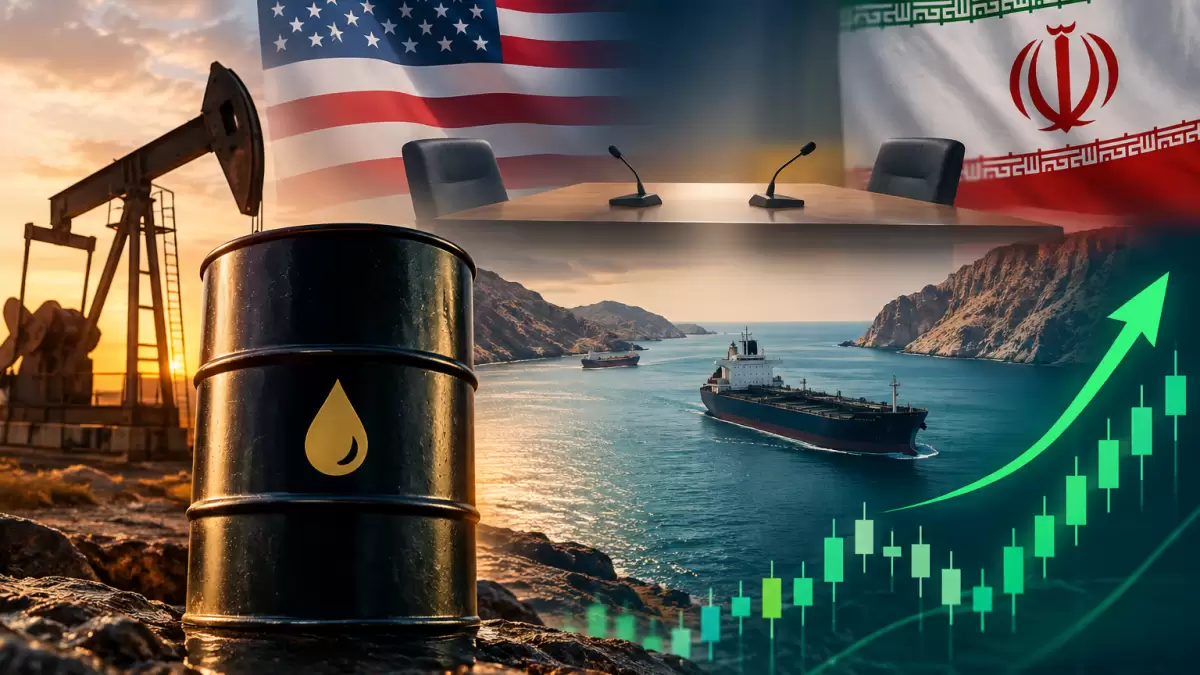
West Texas Intermediate crude rebounded on Wednesday, leaving the US oil benchmark on track to gain around 5.5% for the month. The recovery reflects continued market sensitivity to geopolitical developments involving the United States, Iran and the Strait of Hormuz.
Negotiations between Washington and Tehran have yet to produce progress toward reopening the waterway. That stalemate is sustaining uncertainty around the regional oil outlook and supporting WTI, even as supply conditions elsewhere in the Middle East show signs of improvement.
Competing market drivers
The oil market is balancing two opposing influences. Improving Middle East supply conditions provide a potentially moderating factor for crude, while the absence of a breakthrough in US-Iran discussions keeps geopolitical concerns in focus.
For now, the unresolved negotiations appear sufficient to preserve a risk premium in WTI. Wednesday’s rebound and the benchmark’s projected monthly rise indicate that easing supply pressure has not fully displaced concern about the Strait of Hormuz.
What traders are watching
The direction of US-Iran negotiations remains the central near-term catalyst. Signs of progress toward reopening the strait could reduce geopolitical support for crude, particularly if regional supply conditions continue to improve. Conversely, a prolonged stalemate would leave uncertainty elevated and could continue to underpin WTI.
The monthly performance also provides context for the current balance of risks. With WTI set for a gain of roughly 5.5%, geopolitical concerns have remained an important influence across the period. The next shift will depend on whether diplomatic developments begin to reduce that uncertainty or whether the lack of progress persists.