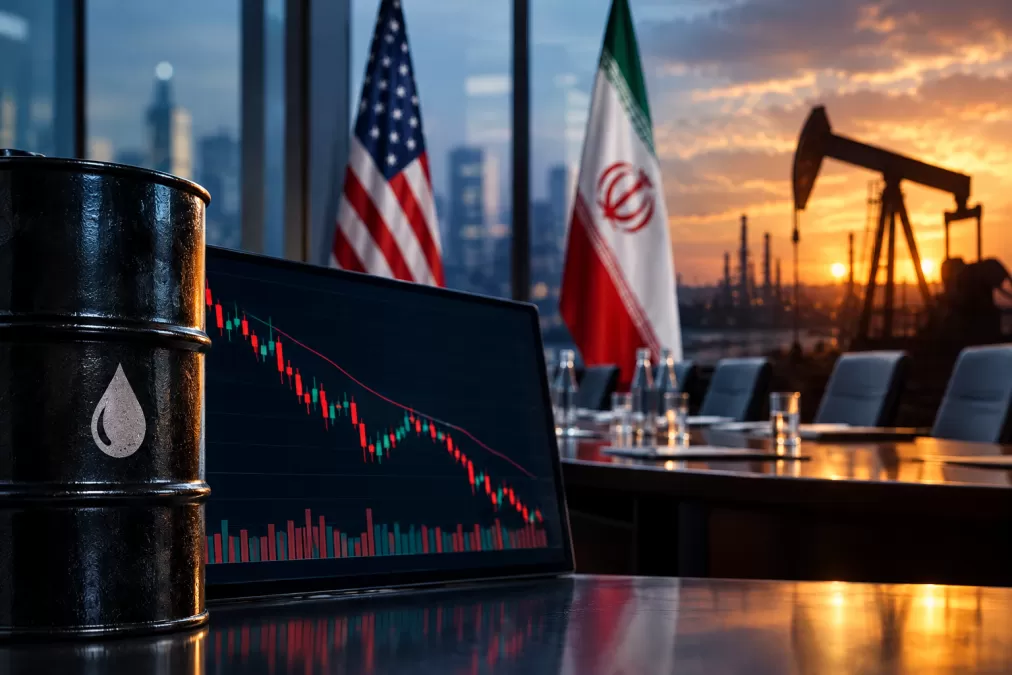
Oil extends decline
WTI crude oil resumed its downward move on Monday, extending losses as it approached the $87 level. The decline came as diplomatic efforts aimed at preventing a renewed outbreak of hostilities between the United States and Iran gained momentum.
The price action indicates that oil traders are responding to the possibility of negotiations rather than a return to conflict. With diplomatic engagement intensifying, the market has taken the developments as a sign that a negotiated conclusion may still be possible.
Diplomacy shapes sentiment
The immediate implication for WTI is bearish because the latest diplomatic push has reduced the market’s focus on renewed confrontation. The move does not confirm that an agreement will be reached, but it shows that expectations surrounding US-Iran relations remain an important driver of short-term oil sentiment.
The decline also highlights how quickly crude prices can respond when the perceived path of a geopolitical conflict changes. In this case, stronger efforts to avoid further hostilities have coincided with renewed selling pressure in WTI.
What traders are watching
Attention now remains centered on whether diplomatic efforts lead to meaningful progress toward resumed negotiations. Further signs that the two sides are moving toward a negotiated outcome could reinforce the market’s current interpretation. Conversely, any setback in those efforts would challenge the assumption that renewed hostilities can be avoided.
For now, WTI’s extension toward $87 reflects a market leaning toward de-escalation. The geopolitical outlook, rather than a newly reported shift in broader oil-market fundamentals, is the central factor behind Monday’s move.